
A Florida law passed in 2022 to combat ‘woke’ social requirements in schools and businesses has been struck down in court. The U.S. Court of Appeals for the 11th Circuit on Tuesday ruled 2-1 that the ‘Stop WOKE Act’ violates First Amendment protections of free speech.
The court’s ruling on Tuesday was the result of an appeal to a 2022 ruling by U.S. District Judge Mark Walker, blocking enforcement of the law. Walker at the time called the law “positively dystopian”.
Officially titled the Stop Wrongs to Our Kids and Employees Act (and later the Individual Freedom Act), the law commonly known as Stop WOKE created restrictions on the way certain social topics could be promoted in the classroom and workplace. These covered controversial areas such as the theory around modern gender and race issues.
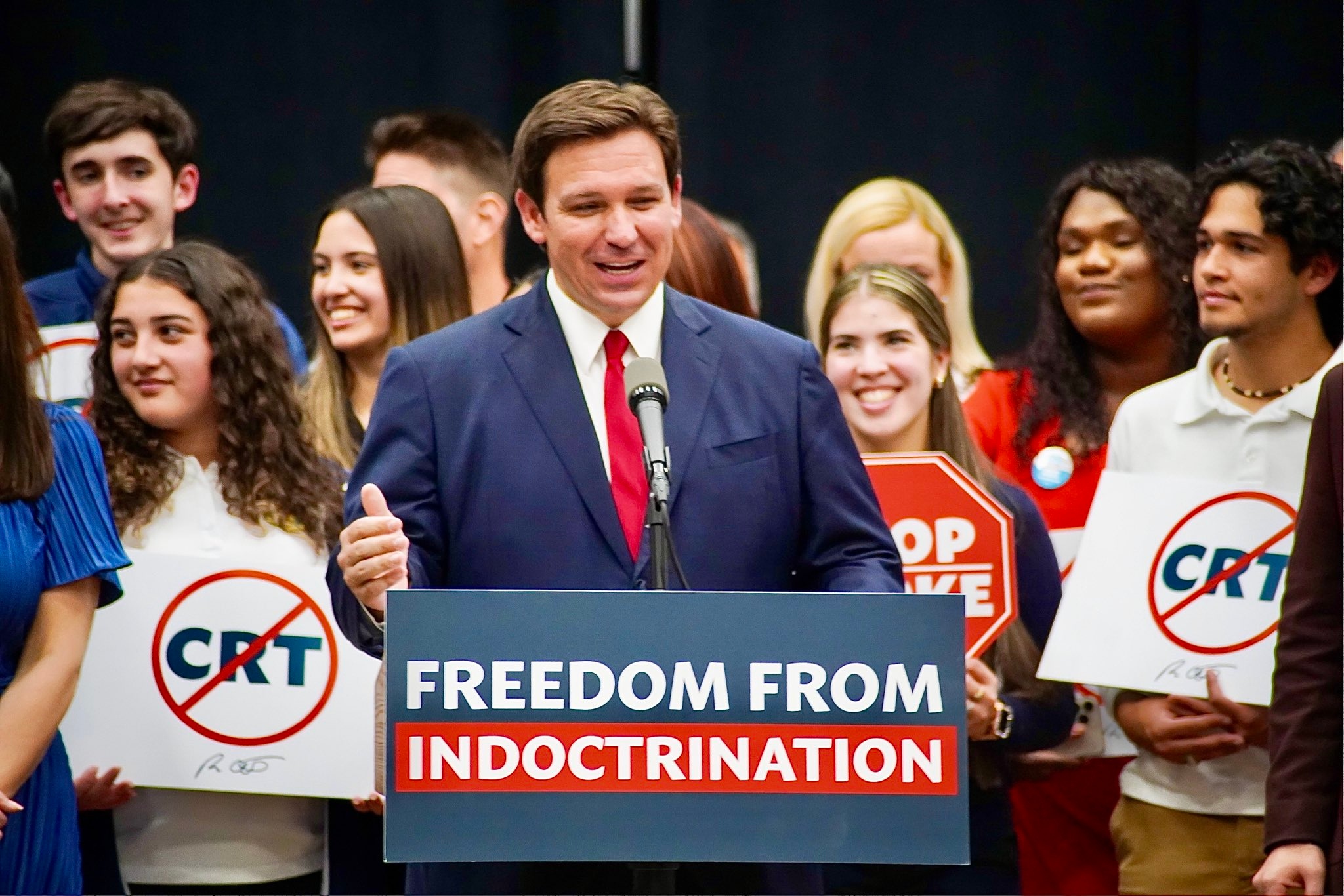
Gov. Ron DeSantis was a strong champion of the law, saying it pushed back against “woke indoctrination” in Florida. The state legislature passed it along party lines, with Republicans supporting and Democrats opposing. DeSantis signed it into law on April 22, 2022.
The three-member appeals board on Tuesday added to Walker’s critiques of the law and its constitutionality. In their decision, the court called the Stop WOKE Act “a breathtaking assertion of power to ban unpopular ideas from public discourse in the very places the State’s own statutes recognize as centers of inquiry”. As it pertained to public universities affected by the law, the ruling argued that students should “puzzle through ideas that are good and bad, easy and hard, ideally getting ever closer to the truth.”
The two-judge majority was formed by Charles R. Wilson and Britt C. Grant. The former was appointed by President Bill Clinton, and the latter by President Donald Trump. The one dissenting judge was Barbara Lagoa, another Trump appointee and former member of the Florida Supreme Court.
“This new rule also runs headlong into the Supreme Court’s repeated, if imprecise, endorsements of academic freedom,” Grant said in the majority opinion. “If the First Amendment offers any boundary of protection at all for public university classrooms, this statute crosses it.”
Lagoa’s dissent argued that the majority were using the court to enact certain political views into law. “This panel is not free to rewrite precedent simply because we dislike where it leads,” she said. Lagoa further argued that the Florida Board of Governors is empowered by state law to oversee the state university system.
If the Florida state government chooses to continue fighting for the Stop WOKE Act, it has multiple options. For one, it can request that the U.S. Court of Appeals for the 11th Circuit hear the case once more. It can also petition the U.S. Supreme Court to hear the case.